As AI reshapes global demand for semiconductors, Singapore is attracting billions in new manufacturing investment while expanding its capabilities in chip production, advanced packaging, equipment engineering and research. The question is whether these investments can turn the city-state into a more integrated semiconductor innovation and manufacturing centre.
A semiconductor factory is only one part of the story. Behind every chip lies a network of equipment suppliers, materials specialists, research laboratories and engineers working to make production faster, more reliable and more efficient.
Singapore has spent decades building that network. Now, as artificial intelligence (AI) fuels demand for memory, specialised chips and computing infrastructure, the city-state is positioning itself for a bigger role in the global semiconductor industry.
The scale of investment is striking. Singapore attracted more than S$30 billion in semiconductor investments between 2022 and 2025, according to the Singapore Economic Development Board (EDB). It has also committed S$800 million to semiconductor research and development under its Research, Innovation and Enterprise 2030 programme.
But the more interesting story is where that money is going and why global companies are choosing Singapore.
These investments reflect Singapore’s presence across several segments of the semiconductor value chain. Whether this broader industrial footprint translates into a lasting competitive advantage will depend on how effectively these capabilities connect and respond to changing global demand.
AI is driving the investment. But what exactly does Singapore bring to the table?
The AI boom is often associated with powerful processors and enormous data centres. Yet the infrastructure behind AI depends on a much wider semiconductor supply chain.
Memory and storage chips handle vast quantities of data. Specialised semiconductors manage power and connectivity. Manufacturing equipment enables increasingly complex production processes, while advanced packaging brings multiple components together into integrated systems.
Singapore already has an established presence across these segments.
Micron operates a major NAND memory manufacturing complex in the country. GlobalFoundries manufactures specialised semiconductors, while UMC produces chips for applications including connectivity, automotive electronics and consumer devices. Equipment companies such as Applied Materials, KLA and ASMPT support semiconductor production and packaging.
The distinction is important. Singapore’s semiconductor industry is not limited to wafer fabrication. It also includes the equipment, engineering and research activities that support chip production. How much additional value these activities generate locally remains an important question.
Three investments that reveal what the industry sees in Singapore
The strongest evidence of Singapore’s appeal comes from the decisions made by companies investing their own capital.
Micron: betting on the long-term demand for memory
In January 2026, US-based Micron Technology broke ground on a new advanced NAND wafer fabrication facility in Singapore. The planned investment is approximately US$24 billion over ten years, with the facility designed to provide around 700,000 square feet of cleanroom space.
Wafer production is scheduled to begin in the second half of 2028. The expansion is intended to address growing demand for NAND memory driven by AI and data-intensive applications, according to Micron’s Singapore investment announcement.
The investment highlights an important feature of the AI boom. Demand is not confined to processors. AI infrastructure also requires substantial storage capacity, making memory an essential part of the broader computing ecosystem.
Micron’s decision builds on its existing manufacturing presence in Singapore. It also raises the importance of the supporting infrastructure, equipment and engineering services needed to operate increasingly sophisticated production facilities.
Applied Materials: manufacturing the tools behind the chips
In June 2026, US semiconductor equipment manufacturer Applied Materials expanded its Singapore operations with a new US$500 million manufacturing and R&D campus in Tampines. The expansion strengthens the company’s capacity to support semiconductor production and AI-related demand, as detailed in Applied Materials’ official announcement.
The company makes equipment and provides technologies used by semiconductor manufacturers to produce chips. Its expansion therefore reflects demand not only for semiconductors themselves, but also for the systems needed to manufacture them.
Applied Materials CEO Gary Dickerson explained the logic behind the investment in an interview with the EDB:
“We have customers investing here for chip technologies (and) customers investing here for packaging technologies.”
When equipment suppliers and chipmakers operate within the same ecosystem, they can work more closely on engineering challenges, production processes and new technologies. For Singapore, the expansion represents an opportunity to develop capabilities in the equipment and engineering segments that support semiconductor manufacturing.
UMC: strengthening the specialised chip supply chain
Taiwan-headquartered UMC announced a major Singapore foundry expansion in April 2025, with up to US$5 billion in investment to bring the first phase to a capacity of 30,000 wafers per month.
The facility is designed for 22nm and 28nm manufacturing processes and is expected to create approximately 700 local jobs. Its chips are intended for global customers across applications including smartphone displays, power-efficient memory, IoT devices and next-generation connectivity, according to UMC’s official expansion announcement.
The investment illustrates why Singapore’s strategy is not solely about the most advanced processors. Mature and specialised semiconductor technologies remain essential to the electronics industry, from vehicles and industrial equipment to communications devices.
Together, the Micron, Applied Materials and UMC investments show how companies are expanding different parts of Singapore’s semiconductor industry. Their commercial motivations vary, but each investment adds to the country’s manufacturing and engineering capabilities.
October’s latest development: Singapore becomes a test bed for AI-powered factories
On October 25, 2026, GlobalFoundries announced a development that adds another dimension to Singapore’s semiconductor ambitions. The company officially opened its AI-enabled Advanced Facilities Control Centre at its Singapore campus on October 26, in collaboration with Siemens.
The project is designed to change how complex semiconductor facilities are monitored and maintained.
GlobalFoundries is integrating five facility-specific control centres across its Singapore campus into one central operating environment. By combining facilities data and operational metrics, the system uses AI-enabled monitoring and predictive maintenance to help engineers identify emerging issues, investigate root causes and prioritise interventions.
Autonomous robots equipped with thermal imaging, gas detection, vibration and acoustic sensors also conduct inspections and transmit information for analysis.
The ambition extends beyond one site. GlobalFoundries says a full global deployment could integrate more than one million critical facilities data points across its worldwide manufacturing network, enabling performance comparisons between sites. This is a future deployment target, not a capability already implemented across the entire network.
Pradip Singh, GlobalFoundries’ chief manufacturing officer, described the initiative as a step towards a more connected and resilient manufacturing network.
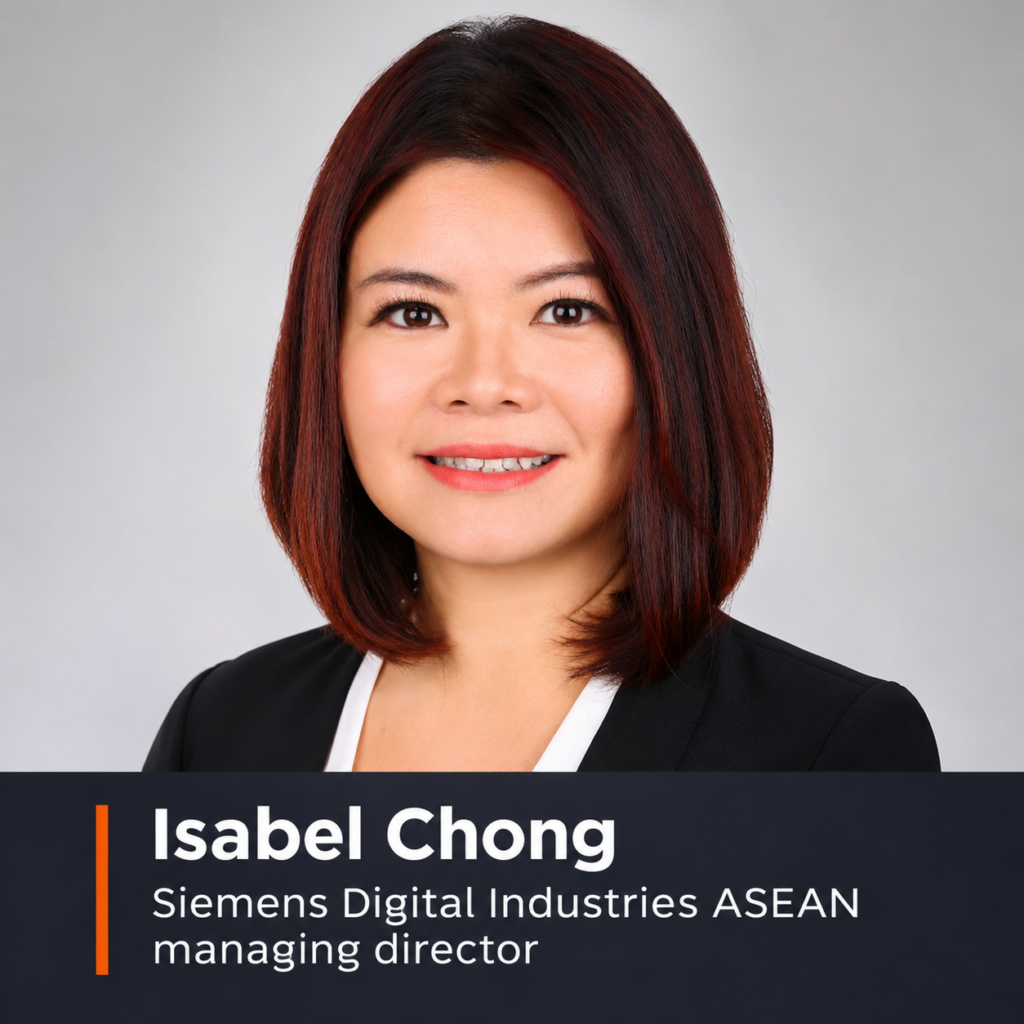
Siemens Digital Industries ASEAN managing director Isabel Chong added:
“With trusted data, secure infrastructure and deep industrial know-how, we can scale predictive maintenance, advanced automation and Industrial AI with Singapore as the starting point.”
The significance extends beyond semiconductor production. Factories in pharmaceuticals, electronics, aerospace and other complex industries face similar challenges involving equipment reliability, maintenance and operational visibility.
If these systems demonstrate measurable improvements in uptime, maintenance costs or energy use, the approach could have applications across multiple manufacturing sectors. Those gains, however, will need to be established through operational results rather than assumed from the technology’s deployment.
For Singapore, the project demonstrates how manufacturing can become a platform for industrial AI, automation and engineering innovation.
The next frontier: developing technologies, not just manufacturing them
Singapore’s ambitions also extend into research and development.
Under its Research, Innovation and Enterprise 2030 programme, the government has committed S$800 million to a semiconductor R&D flagship focused on strengthening research capabilities and accelerating the commercialisation of new technologies. Priority areas include advanced packaging, heterogeneous integration and advanced photonics, according to the EDB’s announcement on Singapore’s semiconductor research investment.
Advanced packaging is particularly relevant as AI computing becomes more demanding. Instead of relying exclusively on smaller transistors, manufacturers can combine multiple chips and components within a package to improve performance and power efficiency.
Silicon photonics, which uses light to transmit information, has potential applications in high-speed communications and data infrastructure. Power semiconductor technologies based on materials such as silicon carbide and gallium nitride are important for electric vehicles, energy conversion and industrial systems.
Singapore is not starting from scratch. Its existing manufacturing operations, research institutions and equipment suppliers provide a foundation for developing these capabilities.
The challenge is to turn research into products and processes that companies can adopt commercially.
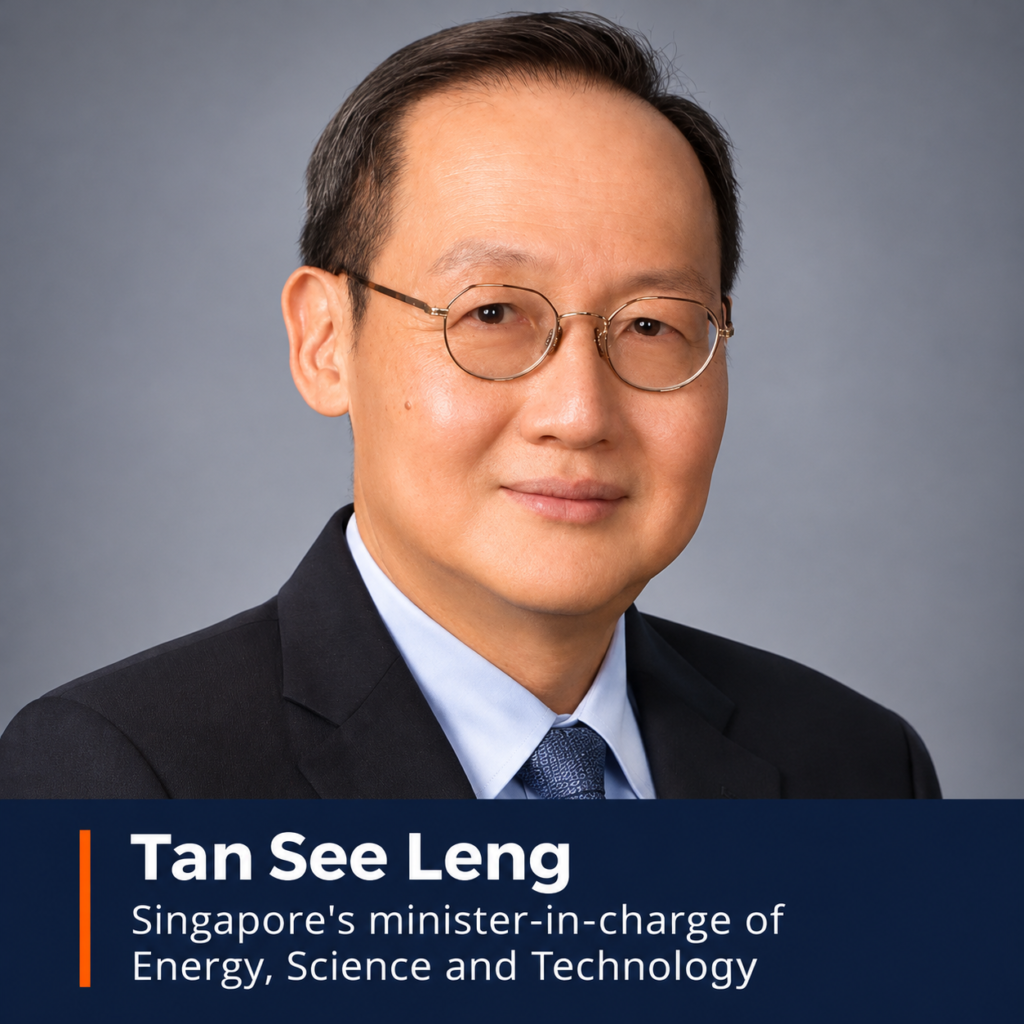
Tan See Leng, Singapore’s minister-in-charge of Energy, Science and Technology, said the semiconductor research flagship would
“translate research into products and encourage more advanced R&D and manufacturing activities, creating good jobs in Singapore.”
Who is Singapore targeting and how is the market responding?
Singapore’s semiconductor industry serves a global customer base across several end markets.
AI and cloud infrastructure: Memory, storage, connectivity and advanced packaging support data centres and AI computing.
Automotive and electric vehicles: Specialised chips and power electronics serve vehicle systems, power management and connectivity.
Industrial automation: Sensors, power semiconductors and control electronics support connected machinery and automated production.
Telecommunications: Specialised chips and photonics technologies support communications networks and high-speed data transmission.
Semiconductor equipment and R&D: Equipment manufacturers and research partners serve chipmakers seeking better manufacturing processes and new technology capabilities.
These markets do not all move in the same direction at the same time. AI-related investment is currently a major driver, while automotive, industrial and communications applications provide additional sources of demand.
So far, corporate investment decisions offer evidence of a positive market response. Micron’s planned multibillion-dollar facility, Applied Materials’ expansion and UMC’s foundry investment all indicate that global companies see strategic value in Singapore’s ecosystem. The EDB’s semiconductor industry overview provides further context on the companies and capabilities operating in the country.
There are limits to this evidence. Announced investment is not the same as completed capacity, and new factories can take years to reach full production. Semiconductor demand is also cyclical, with pricing and utilisation affected by changes in global supply and demand.
Singapore’s long-term success will depend on whether its investments generate lasting productivity gains, deeper supplier capabilities and commercially successful technologies.
The risk: can Singapore turn investment into industrial leadership?
Singapore faces competition from established semiconductor centres in Taiwan, South Korea and Japan, as well as countries across North America and Europe seeking to attract new manufacturing capacity.
Its strategy does not require it to displace those economies. Instead, it needs to remain competitive in the segments where it has established strengths and build new capabilities around them.
That means ensuring research leads to commercially viable products, developing local suppliers that can meet demanding standards, and training engineers who can work across semiconductor manufacturing and industrial digitalisation.
It also means avoiding the assumption that every investment announcement guarantees a successful outcome.
The more meaningful measures will be whether new facilities reach planned capacity, research becomes commercially useful, local suppliers move into higher-value activities and manufacturers achieve measurable operational improvements.
Singapore has attracted global companies. The next test is how much additional industrial value the country can create around them.
Beyond the factory
Singapore’s semiconductor story is no longer simply about the number of chips produced within its borders.
Micron’s investment shows the importance of AI-driven memory demand. Applied Materials demonstrates the role of equipment engineering. UMC highlights the continuing need for specialised chip manufacturing. GlobalFoundries’ new control centre shows how AI can be applied to the infrastructure that keeps factories operating.
Meanwhile, the government’s research investment seeks to strengthen the technologies that will underpin future semiconductor systems.
Together, these developments point to a broader ambition of making Singapore a place where companies can manufacture semiconductors, develop new technologies, collaborate with specialist suppliers and deploy more intelligent industrial operations.
The outcome will depend on execution. But the direction is clear.
In the next phase of global manufacturing, competitive advantage may depend as much on the ecosystem surrounding a factory as on what the factory produces. Singapore is betting that this is where its greatest opportunity lies.
Disclaimer
The views and opinions expressed in this article are for informational and editorial purposes only. While Emergent Industry Lens (EI-Lens) endeavours to ensure the accuracy and reliability of the information presented, details may change, and readers are encouraged to verify information with the respective organisations and official sources.Images used in this article may include original visuals, licensed or publicly available photographs, and AI-generated or AI-assisted illustrations. Such images are intended for editorial representation and may not depict actual events, facilities, products or individuals exactly as they appear in reality. Company names, trademarks and logos remain the property of their respective owners.EI-Lens does not claim ownership of third-party content unless explicitly stated. All rights remain with their respective copyright holders. For corrections, attribution concerns or copyright-related requests, please contact editor@ei-lens.com.